Busted: 5 Ammunition Beliefs That Sound Smart But Just Aren't True
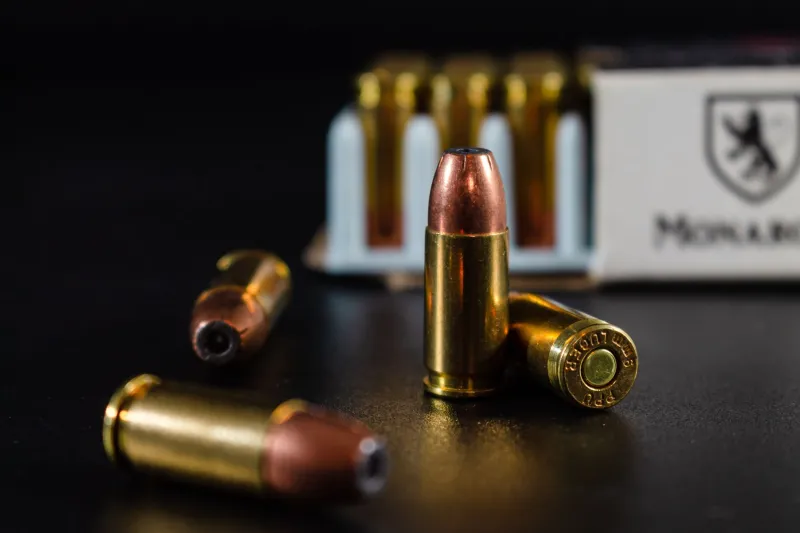
Every shooter has that one buddy who speaks about ammunition like he wrote the physics textbook himself. Maybe it's the guy at your local range who insists faster is always better, or the hunting camp veteran who swears a certain brand of premium rounds will drop any whitetail cleanly at 400 yards. The problem? A lot of what gets passed around as gospel in the firearms community is more folklore than fact.
We're not here to embarrass anyone — honestly, some of these myths are understandable. They sound logical on the surface. But if you're spending real money on ammunition (and you are), you deserve to know what's actually backed by evidence and what's just gun store mythology. Let's break down five of the biggest offenders.
Myth #1: Higher Velocity Always Means Better Accuracy
This one gets repeated constantly, and it makes intuitive sense — faster bullet, flatter trajectory, less drop, better shot. Except the relationship between velocity and accuracy is a lot more complicated than that.
Accuracy at the target depends on a combination of factors: bullet stability, barrel harmonics, consistency of the load, and how well the round matches your specific rifle's twist rate. A bullet that's screaming out of the barrel at 3,200 fps but is slightly under-stabilized for your 1:10 twist rate will keyhole before it ever reaches your target. Meanwhile, a well-matched load running at a more modest 2,800 fps can deliver sub-MOA groups all day long.
Real-world testing consistently shows that "fast" doesn't mean "accurate." Competitive long-range shooters often choose loads optimized for consistency and ballistic coefficient — not raw speed. Velocity matters, but it's one variable among many, not the whole story.
Takeaway: Don't chase velocity specs on the box. Test different loads through your specific rifle and let your groups tell you what works.
Myth #2: Premium Ammo Always Outperforms Budget Brands
This is the one that costs people the most money. The logic seems sound — you pay more, you get more. And sometimes that's true. Federal Premium, Hornady, and Nosler make genuinely excellent hunting rounds that justify their price tags for specific applications.
But "premium" doesn't automatically mean "better for your situation." For range practice and training, shooting a hundred rounds of quality brass-cased, budget-friendly ammunition through your rifle will do more for your skill development than two boxes of premium rounds you're too nervous to shoot fast. And for many hunters shooting inside 200 yards at whitetail, a well-placed shot with a quality mid-tier load is every bit as effective as a boutique hunting round.
Blind tests conducted by independent firearms writers and ammunition testers have repeatedly found that certain "budget" options — think Fiocchi, PPU, and Remington Core-Lokt — perform comparably to significantly pricier alternatives in accuracy testing and terminal performance on game.
Takeaway: Match the ammo to the job. Premium loads earn their keep in precision applications and tough hunting conditions. For general practice and straightforward shots, don't let brand prestige drain your wallet.
Myth #3: Old Ammo Goes Bad Fast
You've probably heard someone say you should never trust ammo that's more than a couple of years old. This one, frankly, is mostly nonsense — and it's led a lot of shooters to toss perfectly good rounds.
Properly stored ammunition has an impressively long shelf life. Military surplus from the 1960s and '70s still fires reliably when it's been kept in cool, dry conditions. The real enemy of ammunition isn't time — it's moisture, extreme heat, and improper storage. Primers are sensitive to humidity, and prolonged exposure to high temperatures can degrade powder over time, but a box of centerfire rifle ammo sitting in a climate-controlled room will be just as reliable in 15 years as it is today.
The caveat here is rimfire ammunition, which tends to be more sensitive to storage conditions due to the nature of its priming compound. But even then, proper storage dramatically extends usable life.
Takeaway: Don't toss ammo just because it's old. Check for obvious signs of corrosion or damage, store it right, and it'll serve you well for years. (For more on proper storage, check out our guide on protecting your stockpile.)
Myth #4: Heavier Bullets Always Hit Harder
This one is partially true, which makes it more dangerous as a myth. Heavier bullets do carry more momentum, and momentum matters for penetration — especially on larger or tougher game. A 180-grain .30-06 round hits with more momentum than a 150-grain load from the same cartridge.
But "hitting harder" isn't a single measurement, and terminal performance depends on how a bullet is constructed just as much as how heavy it is. A lighter, well-designed expanding bullet like a Nosler Partition or Hornady SST can deliver devastating energy transfer and reliable expansion at hunting ranges, while a heavy, hardcast bullet designed for deep penetration might blow right through a deer without the controlled expansion that ensures a quick, ethical kill.
For defensive applications, the FBI ballistic testing protocols emphasize expansion and penetration depth together — and the "heaviest available" option doesn't always win.
Takeaway: Bullet weight matters, but construction matters just as much. Match both to your specific application rather than defaulting to the heaviest option on the shelf.
Myth #5: Suppressed Firearms Need Special Subsonic Ammo — Always
This myth has grown right alongside the surge in suppressor ownership across the US. The claim is that you must run subsonic ammo through a suppressed firearm to get meaningful noise reduction. That's an oversimplification that ignores how suppressors actually work.
Suppressors reduce the report from expanding gases at the muzzle — and they do that job regardless of whether your round is subsonic or supersonic. What subsonic ammo eliminates is the separate supersonic crack of the bullet breaking the sound barrier. So yes, subsonic loads are quieter overall. But a suppressor running supersonic ammo still produces significantly less muzzle blast than an unsuppressed firearm — enough to be hearing-safe in many cases, particularly with pistol calibers.
For hunting, many shooters run standard supersonic loads through suppressed rifles with excellent results. The reduction in muzzle blast and recoil is real and useful even without going subsonic.
Takeaway: Subsonic ammo and suppressors are a great combination, but you don't need to run subsonic rounds to benefit from a can. Match your load to the situation, not to the myth.
The Bottom Line
The firearms community runs on shared knowledge — and most of the time, that's a good thing. But even well-meaning advice can calcify into bad habits when it's not questioned. The best shooters we know are the ones willing to test their assumptions, read the data, and occasionally admit they had it wrong.
When you're choosing ammunition — whether it's for deer season, the range, or home defense — base your decisions on evidence, not on what sounds authoritative over a cup of coffee at deer camp. Your wallet and your shooting will both be better for it.
Browse our full selection at Best Ammunition Store and find the right load for your rifle, your game, and your budget — no mythology required.