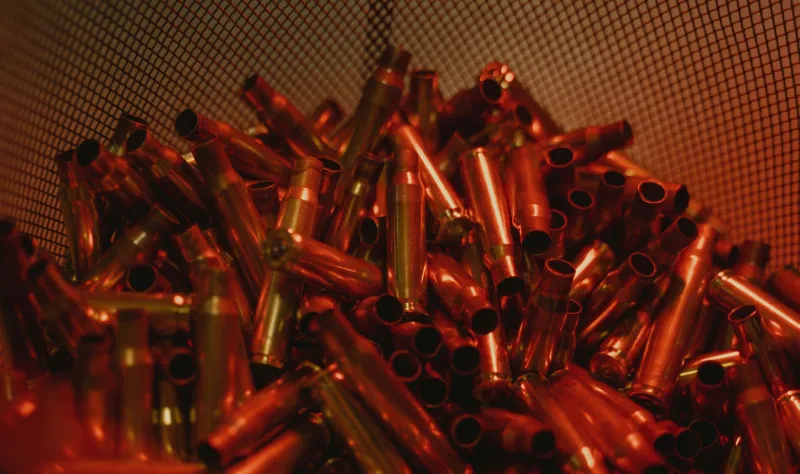
Not All Rounds Are Created Equal: Matching Your Ammo to the Way You Actually Shoot
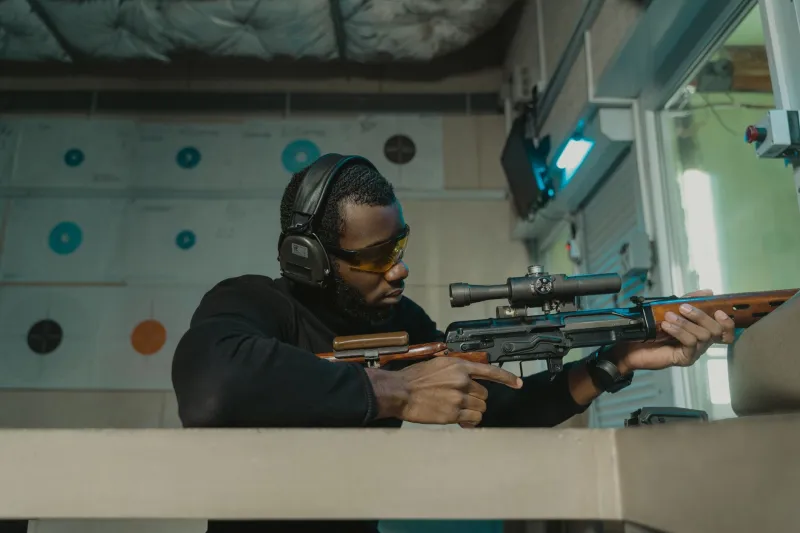
Walk into any gun shop or scroll through an ammo retailer and you'll quickly realize there are about a hundred ways to feel overwhelmed. Hollow points, boat tails, full metal jackets, 55 grain, 77 grain, 3,000 feet per second, subsonic — the specs stack up fast. And if you're not sure what any of it means for your shooting, you're probably just grabbing whatever's in stock and hoping for the best.
That's a fine approach for some folks. But if you're serious about getting more out of every range trip — or every season in the field — it pays to understand why certain ammunition specs matter for certain shooting styles. Let's break it down by discipline so you can stop leaving performance on the table.
Long-Range Precision: Where Every Detail Counts
If you're shooting at 600, 800, or 1,000 yards, ammunition selection stops being a casual decision real fast. At those distances, tiny variables compound into massive misses.
The two specs that matter most here are bullet weight (grain) and ballistic coefficient (BC). Heavier bullets — think 168 to 175 grain in .308 Win, or 77 grain in 5.56 — resist wind drift better and retain velocity longer downrange. Pair that with a high BC (a measure of how efficiently a bullet cuts through air), and you've got a round that stays on course even when the wind picks up.
For precision rifle competition — PRS matches, F-Class, or just running steel at distance — most serious shooters gravitate toward open-tip match (OTM) or hollow point boat tail (HPBT) projectiles. These designs prioritize consistent seating and a uniform tip, which translates to tighter groups. Factory match-grade ammo from manufacturers like Federal Gold Medal or Hornady's ELD Match line is built specifically with this in mind.
Velocity consistency matters too. You want your muzzle velocity to be as uniform as possible from round to round — ideally within 10-15 fps standard deviation. Inconsistent velocity causes vertical stringing on your target, which is a nightmare when you're already fighting wind at distance.
Bottom line for precision shooters: Go heavy, go high BC, and invest in match-grade ammo. It's worth the extra cost per round when you're spending serious time dialing in your rifle.
Tactical and Competition Shooting: Speed Meets Reliability
For USPSA, IDPA, 3-gun competitors, or anyone running tactical drills, the priorities shift considerably. You're not trying to thread a needle at 800 yards — you're trying to hit multiple targets accurately, fast, and without your gear fighting you.
Here, reliability and felt recoil take center stage. A round that causes malfunctions or beats you up after 200 rounds in an afternoon is working against you regardless of how accurate it is on paper.
For pistol shooters, 115 grain 9mm is a perennial favorite for competition — it's widely available, cycles reliably in most semi-autos, and produces manageable recoil for fast follow-up shots. Bump up to 124 grain if you want a little more momentum and slightly better felt recoil management, especially in heavier-framed guns.
For rifle-based competition, 55 grain .223/5.56 loads keep recoil light and allow for faster target transitions. That said, if your stage distances push past 200 yards, you'll want to consider stepping up to 62 or 77 grain for better stability.
Full metal jacket (FMJ) rounds are the go-to for most range and competition use — they're cost-effective, consistent, and most indoor ranges require them anyway. Save your premium defensive loads for their intended purpose.
Bottom line for competition shooters: Prioritize reliability and manageable recoil over raw ballistic performance. Practice with the same round you compete with to keep your muscle memory consistent.
Casual Range Days: Getting the Most Bang for Your Buck
Not every trip to the range needs to be a tactical exercise or a precision challenge. Sometimes you're just out there having fun, working on fundamentals, or introducing a buddy to the sport. And that's totally valid.
For casual range sessions, FMJ bulk ammo is your best friend. It's affordable, it cycles reliably, and it lets you put a lot of rounds downrange without watching your wallet empty out. Whether you're shooting 9mm, .45 ACP, .223, or .22 LR, there's solid bulk ammo available that'll serve you well for basic target shooting.
That said, even casual shooters benefit from paying attention to a few basics. Make sure the ammo you're buying is appropriate for your barrel's twist rate — especially in AR-platform rifles. A 1:9 twist barrel handles 55 grain well, but if you're running 77 grain pills through it, don't expect great accuracy. Check your manufacturer specs if you're not sure.
Also, watch out for steel-cased ammo at some ranges — many facilities don't allow it due to potential damage to their backstops or fire hazards from steel sparks. Brass-cased FMJ keeps you welcome at virtually any range.
Bottom line for casual shooters: Buy in bulk, stick to brass-cased FMJ, and make sure your ammo weight is compatible with your setup. You'll shoot more and stress less.
The Specs That Tie It All Together
No matter what discipline you're shooting, a few universal specs are always worth understanding:
- Grain weight affects recoil, velocity, and how well a bullet holds its trajectory at distance. Heavier isn't always better — it depends on your application.
- Muzzle velocity (measured in feet per second) influences energy on target and how flat the bullet shoots. Faster rounds drop less over distance but may be more sensitive to wind.
- Bullet construction — FMJ, HPBT, soft point, polymer tip — determines how the bullet behaves on impact and in flight. Match your bullet type to your purpose.
- Pressure ratings (standard vs. +P vs. +P+) affect how much energy is generated. Make sure your firearm is rated for whatever you're running.
Understanding these specs isn't about becoming a ballistics engineer — it's about making smarter choices so your ammo works with you, not against you.
Final Thought
The right ammo is the one that fits your gun, your goals, and your shooting style. There's no universal best round — only the best round for you. Whether you're chasing tight groups at long range, trying to shave seconds off your competition splits, or just enjoying an afternoon at the range with friends, taking a few minutes to match your ammo to your discipline will make every session more productive and more fun.
At Best Ammunition Store, we stock rounds across every category — from match-grade precision ammo to reliable bulk FMJ for high-volume training. Browse our selection and find what fits your style.