Deer Season Decoded: Choosing the Right Ammo for Your Rifle and Where You Hunt
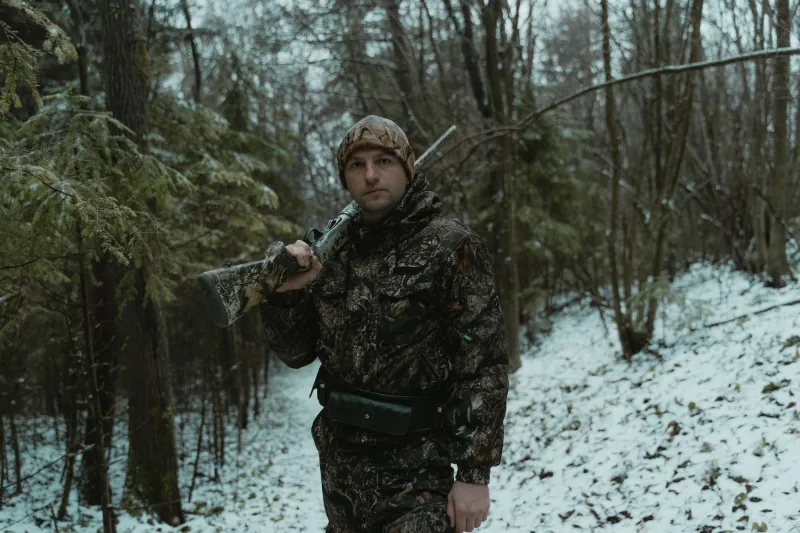
Every fall, millions of American hunters head into the woods with one goal: putting venison in the freezer. But before you lace up your boots and grab your rifle, there's one decision that deserves more thought than most folks give it — your ammunition. The round you load matters just as much as your shooting ability, your stand placement, or how early you wake up on opening morning.
At Best Ammunition Store, we talk to hunters every single day who are genuinely surprised to learn how much their hunting environment should influence their ammo selection. So let's break it all down in plain language.
Why Terrain Should Drive Your Ammo Decision
Here's the thing most generic ammo guides skip over: the where matters just as much as the what. A hunter working thick Eastern hardwoods in Pennsylvania is dealing with completely different shot scenarios than a guy glassing mule deer across a 400-yard Wyoming canyon.
In dense cover — think Appalachian laurel thickets, Southern swamps, or Midwestern river bottoms — your shots are typically short. We're talking 50 to 150 yards, often less. In these situations, you want a heavier, controlled-expansion bullet that won't over-penetrate or fragment wildly on a close-range shot. Terminal performance at modest velocity is the name of the game.
Out West, it's a different story entirely. Open plains, high desert, and mountain terrain demand flatter trajectories and bullets that hold together at longer ranges. When you're stretching shots past 250 yards, bullet drop and wind drift become real factors, and you need a round that stays accurate and still delivers enough energy at the target to do the job ethically.
The Big Three: .30-06, .308 Win, and 6.5 Creedmoor
These three calibers dominate deer camps across the country, and for good reason. Each brings something a little different to the table.
.30-06 Springfield — The All-American Standard
If there's a Mount Rushmore of deer cartridges, the .30-06 is front and center. It's been putting whitetails, mule deer, and elk on the ground since before most of our grandfathers were born. With bullet weights ranging from 150 to 220 grains, it's incredibly versatile. A 165-grain Federal Fusion load, for example, delivers outstanding terminal performance at both close and moderate ranges.
For Eastern woodland hunters, a 180-grain bonded bullet like the Nosler Partition or Remington Core-Lokt gives you deep penetration through shoulder bone without over-fragmenting. Out West at longer ranges, drop down to a 150-grain polymer-tip like Hornady SST for a flatter trajectory and better ballistic coefficient.
The honest truth? If you already own a .30-06, you don't need to buy a new rifle. Just match your load to your terrain.
.308 Winchester — Compact, Efficient, Deadly
The .308 Win is essentially the .30-06's shorter cousin, and it performs remarkably close to it in real-world hunting scenarios. The slightly lower velocity is barely noticeable inside 300 yards. What you gain is a shorter action, which means lighter rifles and smoother cycling — a big deal if you're packing into backcountry.
The .308 shines in semi-automatic platforms like the AR-10, making it a solid choice for hunters who want faster follow-up shots on running deer. Federal Trophy Bonded Tip and Winchester Deer Season XP are both outstanding factory loads for this cartridge. Bullet weights between 150 and 168 grains hit the sweet spot for most whitetail and mule deer applications.
6.5 Creedmoor — The New Kid That Earned Its Spot
A decade ago, mentioning the 6.5 Creedmoor in deer camp might have gotten you some raised eyebrows. Not anymore. This cartridge has absolutely earned its reputation, especially among hunters who regularly take shots beyond 200 yards.
What makes it special is its ballistic coefficient — the 6.5mm bullet diameter is inherently slippery through the air. That means less wind drift and less drop compared to the .308 at extended ranges. A 143-grain Hornady ELD-X or 129-grain SST load out of a 6.5 Creedmoor is genuinely impressive at 300-plus yards.
For Western hunters or anyone hunting open agricultural fields in the Midwest where deer can materialize at 300 yards across a bean stubble field, the 6.5 Creedmoor deserves serious consideration. It's also noticeably softer on recoil than both the .30-06 and .308, which helps newer shooters stay on target.
Bullet Construction: This Is Where It Gets Real
Caliber gets all the attention, but bullet construction is what actually determines whether a deer runs 20 yards or 200. Here's a quick breakdown of the main types you'll find at Best Ammunition Store:
Bonded Core Bullets — The jacket is chemically or mechanically bonded to the lead core, which means the bullet stays together through bone and heavy muscle. Great for close-range shots at big-bodied deer. Federal Fusion and Nosler Accubond fall into this category.
Polymer Tip / Ballistic Tip — These have a plastic tip that initiates rapid, consistent expansion. They're excellent for moderate to long ranges and tend to be very accurate. Hornady SST, Nosler Ballistic Tip, and Winchester Power-Point Plus are popular examples.
Monolithic / Copper Bullets — Made entirely from copper or brass alloy, these bullets retain nearly 100% of their weight and punch through heavy bone like a freight train. Barnes TTSX and Hornady CX are top picks. Bonus: they're lead-free, which matters in California and other states with lead-ammo restrictions.
Standard Soft Point — The old reliable. Remington Core-Lokt has been dropping deer since 1939. Not flashy, but affordable and effective at typical hunting distances.
Bullet Weight and Velocity: A Plain-Language Breakdown
Heavier bullets carry more energy downrange but drop faster. Lighter bullets leave the barrel faster and shoot flatter but may shed velocity more quickly in the wind. For most deer hunters shooting inside 200 yards, bullet construction matters more than squeezing out extra velocity. Beyond 250 yards, a higher ballistic coefficient (the aerodynamic efficiency rating of a bullet) becomes increasingly important.
A simple rule of thumb: if you hunt mostly in timber, go heavier and bonded. If you hunt open country or take longer shots, go with a polymer-tip or monolithic bullet in the mid-weight range for your caliber.
Making a Confident Purchase
The best ammo is the one that shoots accurately out of your specific rifle and fits the conditions you hunt in. That's why we always recommend picking up two or three different loads before season and running them through your rifle at the range. Consistency and accuracy in your particular barrel matters more than any ballistics chart.
Shop our full selection of deer hunting ammunition at Best Ammunition Store, and if you've got questions, our team is always happy to help you dial in the right load before the season kicks off. Hunt hard, shoot straight, and bring home the backstraps.